Use wood and twine for resource efficiency or metal for durability in Project Zomboid base construction.
Choosing Between Wood and Metal
Wood and metal are the two primary materials available for base building in Project Zomboid. Each material has unique advantages and tradeoffs, and the choice depends on your resources and the intended use of your base.
- Wood is a highly resource-efficient material that is easy to collect and widely available. It is ideal for temporary constructions and can be reinforced with twine instead of rope, saving other valuable resources.
- Metal, while harder to gather, offers superior durability and resistance against zombie attacks and wear, making it more suitable for long-term bases. However, constructing with metal requires advanced tools and more effort in obtaining materials.
- A hybrid approach, using metal for essential portions and wood for less critical areas, may optimize your base construction depending on your needs and available resources.
Efficient Resource Use: Twine and Rope
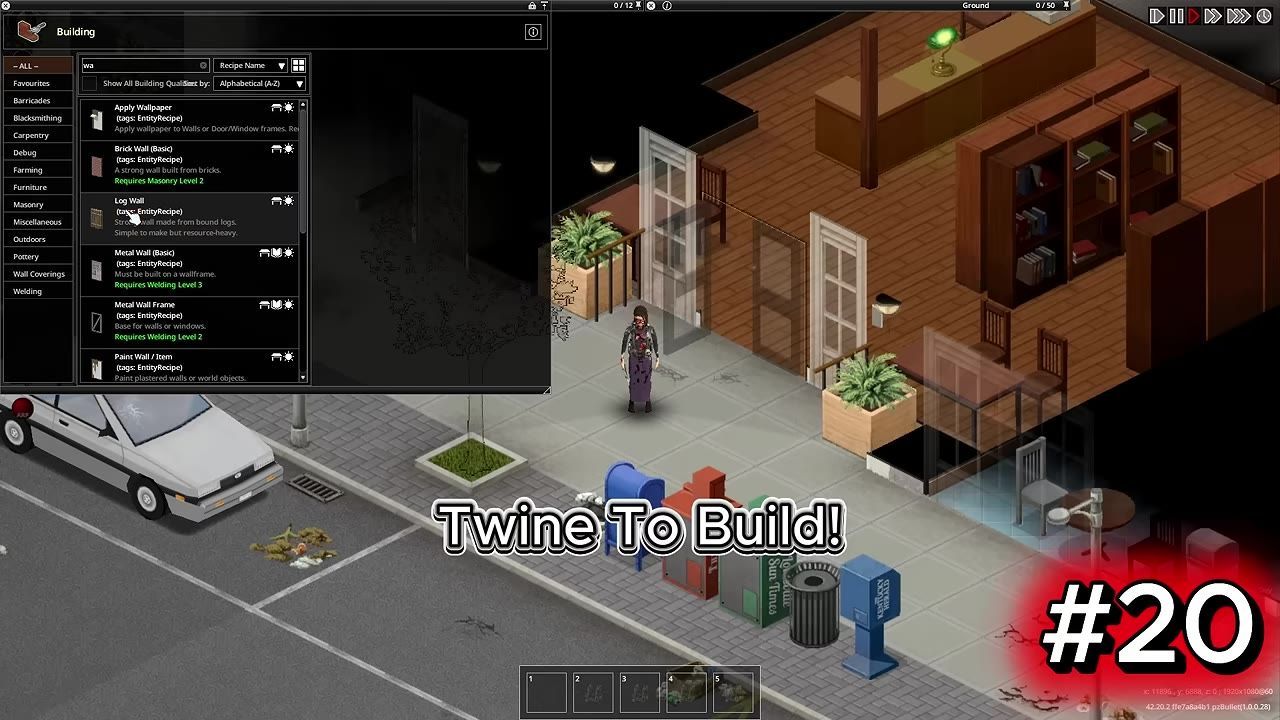
In Build 42, twine serves as a useful alternative to rope for wooden wall construction.

The crafting menu highlights woodworking options requiring twine as a material. — Tallidus Plays
Durability of Materials in Prolonged Gameplay
When planning your base for long-term survival, the durability of the materials you choose is critical.
Choose materials based on use case.
- Wooden walls: Best suited for temporary bases in areas with low zombie density. Keep in mind that reinforced wooden walls have lower durability and wear down faster.
- Metal walls: Provide high resistance against damage, making them ideal for permanent bases, especially in areas prone to zombie hordes.
Resource Acquisition Tips
Gathering the right resources is essential for building a strong base. Here are some efficient methods to collect materials for construction:
steps
- Gather wood: Use an axe to chop trees into logs and collect branches. You can also pick up fallen branches directly from the ground as quick melee weapons or construction materials.
- Save twine: Find twine in lootable areas and use it as a substitute for rope in wooden base construction.
- Salvage metal: Use a sledgehammer in urban areas to collect scrap and metal. Ensure resource sites are clear of zombies before starting collection.
- Utilize Build 42 features: Search basements introduced in the update for extra resources to support your construction activities.

A player is near a river collecting resources with a tool. — Tallidus Plays

A player chops a tree stump with an axe in a game, accompanied by instructions for auto-chopping. — Tallidus Plays
FAQ
materials list for strong base Project Zomboid
A mix of wood and metal is ideal. Use wood for temporary structures and furniture, with twine replacing rope to save resources. For permanent structures, prioritize metal for walls and gates due to its superior durability. Gather logs, twine, metal scraps, and other components from natural resources, loot zones, and newly added basements in Build 42.
wooden vs metallic bases in Build 42
Both materials have strengths: wood is easy to gather and works well for temporary construction, especially with twine as a cost-saving measure. Conversely, metal provides unmatched durability and is better suited for long-term survival against zombies. Depending on resource availability, a hybrid approach can balance efficiency and strength. Regular updates may impact material performance, so keep an eye on patch changes.
Sources
Screenshots on this page are frames from the videos below, used to illustrate the steps they describe. All rights remain with their creators.
- 42 Tips For Build 42 - Project Zomboid — Tallidus Plays, August 9, 2026
Checked against:
- 42.20.4 STABLE & 42.19.2 UNSTABLE & 41.78.21 LEGACY Hotfixes Released — AmazingSully, 2026-08-26
- 42.20.3 STABLE Hotfix Released — AmazingSully, 2026-08-17
- 42.20.2 STABLE Hotfix Released — AmazingSully, 2026-08-05