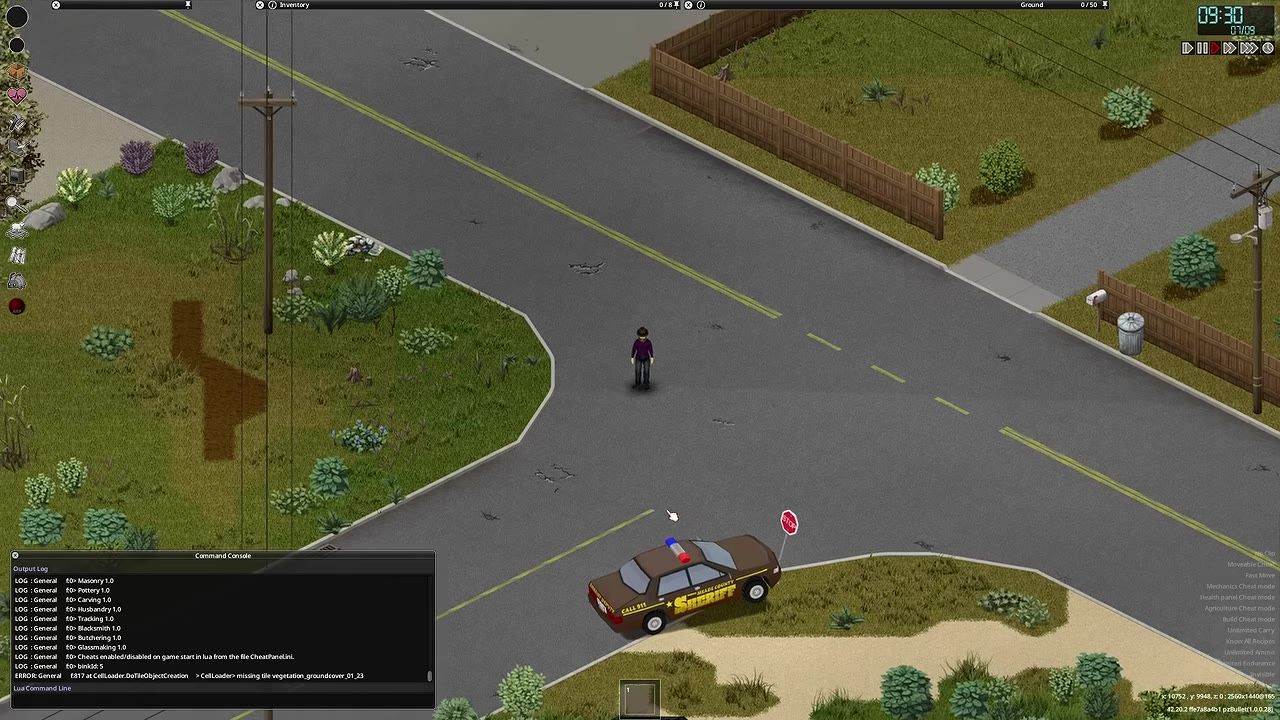
To efficiently manage food and water supplies in Project Zomboid, prioritize strategies for sustaining resources and addressing potential challenges related to survival in the game.
Understanding Food Durability
Proper food storage and preservation are crucial for survival in Project Zomboid, especially under conditions where resources may be limited. Follow these steps to optimize food management:
steps
- Split every haul into perishable and non-perishable. Perishables run fresh, then stale, then rotten, and turn more negative on the way down. Chocolate, pop, beef jerky and butter never rot at all.
- Get the perishables cold. A refrigerator multiplies the time before food spoils by five — a fish fillet that goes stale in two days keeps for ten — and freezing halts decay once the item is fully frozen and its name says so.
- Treat cans as the reserve. A can stays non-perishable until it is opened, and many need a can opener, so keep one at the base.
- Cook before food turns, and take it out on time. Cooking usually pushes back the point at which an item rots; leaving it in a hot oven burns it and adds a chance of sickness.
What Hunger and Thirst Actually Cost
Both meters punish you long before they kill you. Hunger takes a point of carrying capacity at Hungry and a second at Very Hungry, cutting health regeneration at every stage until Starving to Death stops it entirely. Thirst does the same to carrying capacity and to heat dissipation, and it feeds itself: dehydration reduces sweating, which raises body temperature, which raises thirst.
The difference that matters is the ending. At Dying of Thirst, health drains about five times faster than at Starving to Death — water is the emergency, food is the schedule.
Securing Reliable Water Resources
Water is essential for survival in Project Zomboid. Taps, bathtubs and toilets serve while the mains hold, and the mains stop on a timer — by default somewhere in the first thirty in-game days, adjustable in sandbox settings. The emergency broadcast announces the power grid going down; it says nothing before the water does.
steps
- Fill everything you own before the taps die. Hold an empty container — a bottle, mug, kettle or cooking pot — and use Fill on the source.
- Haul a water dispenser home: 250 units, no tools to pick up, refillable once emptied.
- Plumb rain collector barrels into the fixtures you kept, so a sink still runs after the mains stop.
- Boil anything that did not come from a tap. Rivers, lakes, puddles and rain collectors all give tainted water; boiling it in a container clears the tainted marker.
- Carry a full bottle. Your survivor drinks from a container automatically once thirst passes ten percent.
Strategies for Survival in Project Zomboid
Effective survival in Project Zomboid relies on a combination of strategic planning and practical execution. Looted food is finite, so the fridge and the barrel buy time for the supply that renews: agriculture, foraging, trapping and fishing. Build 42.20.0 raised the meat a large animal yields on a butcher hook.

A Food Market sits beside a crowded street filled with zombies. — AwpShorts
FAQ
how to manage food supplies in Project Zomboid efficiently
Refrigerate perishables to multiply their shelf life fivefold, freeze what you cannot eat soon, and hold cans back as the reserve.
best ways to secure water in survival
Fill every container before the mains stop, keep a water dispenser as a clean store, plumb rain barrels into your sinks, and boil what you draw outdoors.
Sources
This guide was written from the videos below. All rights remain with their creators.
- How To Improve Performance in Project Zomboid - (Build 42+) — AwpShorts, August 10, 2026
Checked against:
- 42.20.4 STABLE & 42.19.2 UNSTABLE & 41.78.21 LEGACY Hotfixes Released — AmazingSully, 2026-08-26
- 42.20.3 STABLE Hotfix Released — AmazingSully, 2026-08-17
- 42.20.2 STABLE Hotfix Released — AmazingSully, 2026-08-05
- Build 42.20.0 Stable Released — AmazingSully, 2026-07-29
- Food - PZwiki — pzwiki.net (CC BY-NC-SA 3.0)
- Hungry - PZwiki — pzwiki.net (CC BY-NC-SA 3.0)
- Thirsty - PZwiki — pzwiki.net (CC BY-NC-SA 3.0)
- Water - PZwiki — pzwiki.net (CC BY-NC-SA 3.0)